2026-03-19 — Ottawa-Gatineau
A cracked, sunken garage slab full of road salt damage? In Ottawa-Gatineau, it's one of the most common demolition projects — our climate is hard on concrete. Here's what to know before having it removed.
Demolition or repair?
No need to demolish everything if the slab is structurally sound. A repair (resurfacing, crack injection, polyurethane lifting) may be enough if:
- Cracks are thin and stable
- Settling is minor (under 2")
- The surface is scaling but the structure holds
But if the slab is broken in pieces, sunken several inches, or the garage foundation is moving: demolition and a new slab — often cheaper long-term.
How much does it cost?
Slab demolition — real job site
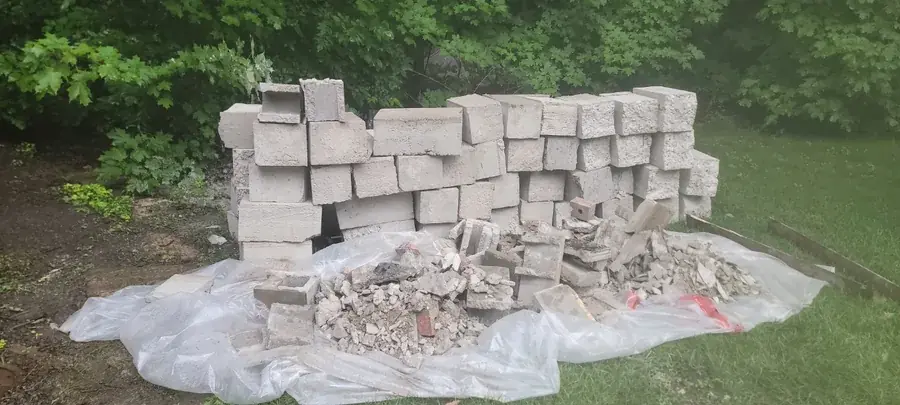 Concrete out, ready for disposal
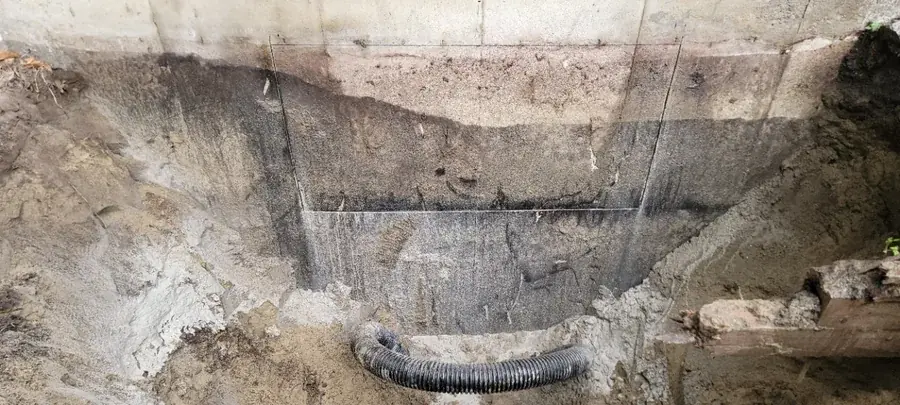 Saw line and drain
Demolition + loading + disposal included, for a typical garage slab (no thick reinforced concrete). A single garage slab (~250 sq ft): $2,000 to $3,500. Double garage: $3,500 to $6,000.
What affects the price
- Thickness and reinforcement — plain 4" vs 6" with mesh or rebar
- Machine access — a mini-excavator in the backyard vs wheelbarrow only
- Disposal — concrete goes to an authorized site; bin fees are included in our price
- Separation cuts — cleanly cutting the joint with the garage foundation or driveway asphalt
Job site steps
- Boundary cutting — clean lines along the foundation and driveway (where professional cutting makes the difference)
- Mechanical breaking — jackhammer or hydraulic hammer depending on size
- Loading and disposal — we handle everything
- Preparation — gravel left level, ready for the new pour
After demolition
Take the opportunity to check the French drain and the soil underneath — now's the time. A well-prepared new slab (compacted gravel, membrane, mesh) lasts 30+ years.
Repair or replace? How to decide
Not every cracked garage slab needs to come out. Hairline cracks with no height difference between the two sides are cosmetic and can be sealed. The slab should be replaced when one side has heaved or sunk more than about ½" (a trip hazard and a sign the base has failed), when the surface is spalling in large patches from years of road salt, or when water pools against the house side instead of draining to the door. If the slab has settled but is otherwise sound, slab-jacking with foam is sometimes an alternative — but it does nothing for a slab that is breaking up.
Why Ottawa-Gatineau garage slabs fail
Two local culprits: frost and salt. Clay soils around Ottawa hold water and heave when it freezes, which lifts the slab unevenly every winter. Meanwhile the salt that drips off the car in January eats the surface. Slabs poured directly on native soil without a gravel base, common in older garages, fail first. That is why the new slab should sit on 6" to 8" of compacted crushed stone with a vapour barrier.
Attached garage: what to protect
In an attached garage the slab usually butts against the house foundation and the garage frost walls. The separation cuts along those edges are what keep the demolition from damaging the foundation — a hydraulic hammer swung right against a wall will crack it. Ask that the perimeter be saw-cut first, that the door frame and any floor drain be protected, and that the wall between the garage and the house be checked for the sill plate anchors, which must not be disturbed.
Timeline and what to expect on the day
A single garage slab is normally demolished, loaded and hauled in one day; a double garage can take two. The car stays outside from the morning of demolition until the new slab has cured — typically 5 to 7 days after the pour before parking on it. Expect a bin in the driveway and noise during working hours; the hammering itself lasts a few hours.
Frequently asked questions
Can the old concrete be recycled?
Yes. Clean concrete goes to a recycling yard where it is crushed into aggregate; that is normally cheaper than landfill, and it is why the disposal fee is lower when the slab is free of wood, soil and asphalt.
Do I need a permit to replace a garage slab?
Replacing a slab like for like generally does not require a building permit in Ottawa or Gatineau, but adding a floor drain connected to the sewer, or changing the slab elevation, can. Check with the city if plumbing is involved.
Can the same crew pour the new slab?
Demolition and concrete finishing are different trades. Many homeowners book the demolition first and the concrete contractor for the following week; a good demolition crew leaves the base level and ready so the finisher can pour without extra preparation.