2026-03-26 — Ottawa-Gatineau
The number one client fear: "will there be dust everywhere in the house?" Honest answer: with the right methods, no. Here's how modern concrete cutting works indoors — even in a finished basement or occupied office.
1. Wet cutting (the real solution)
All our saws — wall saw, flat saw, core drill — cut with water. Water cools the diamond and turns dust into slurry that stays on the floor. Zero dust clouds, zero silica particles in the air.
2. Industrial vacuuming
For occasional dry cuts (small finishing work), we use industrial HEPA vacuums mounted directly on the tool. Dust is captured at the source.
3. Site containment
- Plastic sheeting and zip doors to isolate the work zone
- Floor and furniture protection around the area
- Cutting water management: vacuumed as we go, never left standing
4. Electric equipment (no gas indoors)
Indoors, we work with electric or hydraulic equipment — no gas engines, so no carbon monoxide. It's also much quieter.
What about noise?
Let's be transparent: a concrete saw is loud, even electric. But we're talking a few hours of work, not days. For office buildings, we can work evenings or weekends to disturb no one.
What it means for you
- No need to empty the whole basement — we contain the zone
- No weeks of dust cleanup afterwards
- Work possible in winter, doors closed
Crystalline silica dust is a real health hazard — that's why wet cutting isn't a luxury, it's the professional standard. Be wary of any contractor cutting dry indoors.
What "dust-free" really means
Concrete dust is mostly crystalline silica. Breathing it causes silicosis, and both Ontario (Ministry of Labour) and Quebec (CNESST) regulate exposure on job sites. A professional crew therefore does not treat dust control as a courtesy to the homeowner — it is a legal obligation to its own workers. Wet cutting keeps airborne silica far below the exposure limits; dry cutting with a shop vacuum does not. When a contractor says "dust-free", ask which method they use: water on every cut, or a HEPA extractor rated for silica on the tool.
Room by room: what to expect
Finished basement
The work zone is isolated with plastic sheeting from floor to ceiling, and the floor is covered from the entrance to the cut. Carpet near the cut is protected with a waterproof layer because of the cutting water. Furniture within about 3 metres is moved or covered.
Kitchen or bathroom slab (plumbing trench)
The cabinets and fixtures are protected, the cut is made with a flat saw with water, and the slurry is vacuumed continuously. The trench is usually cut and the concrete removed in one day so the plumber can work the next.
Occupied office
Cutting happens after hours; the zone is sealed, the HVAC return in that area is covered so slurry mist does not reach the ducts, and the floor is dry and clean before staff arrive in the morning.
What you should do before the crew arrives
- Remove anything valuable or water-sensitive from the room (electronics, documents, artwork)
- Take down items hanging on the wall being cut — vibration can loosen them
- Turn off the furnace or air exchanger during the work if the return is in the room
- Make sure a water tap and an electrical outlet are accessible
Questions to ask any contractor
- Do you cut wet, and how do you collect the water?
- Do you bring your own containment (sheeting, zip doors)?
- Is cleanup included, and what condition is the room left in?
- Do you use electric equipment indoors?
The answers tell you quickly whether you are dealing with a professional concrete cutter or a general demolition crew with a grinder.
Questions about your interior project? The quote is free.
Clean cutting in practice
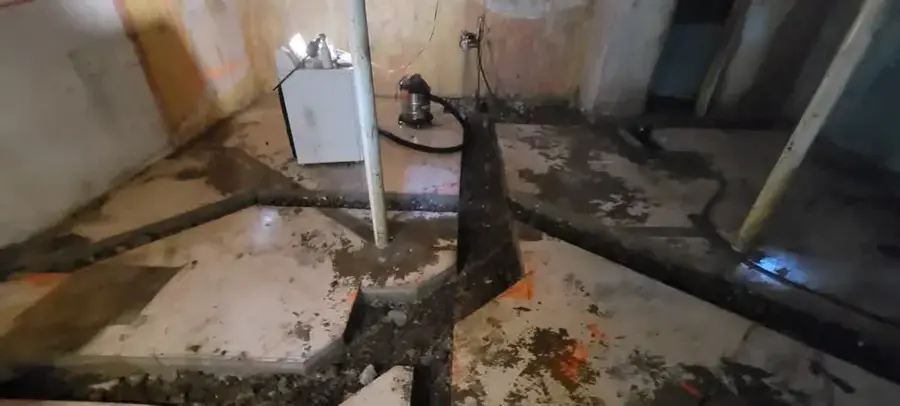 Job-site vacuum
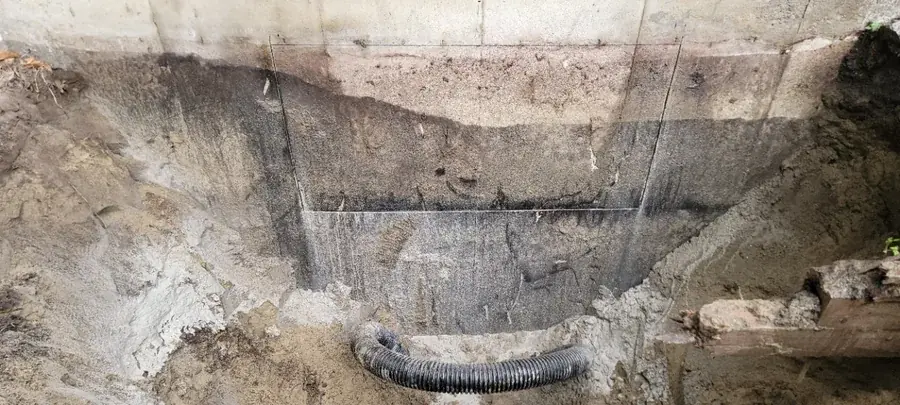 Saw line and drain